
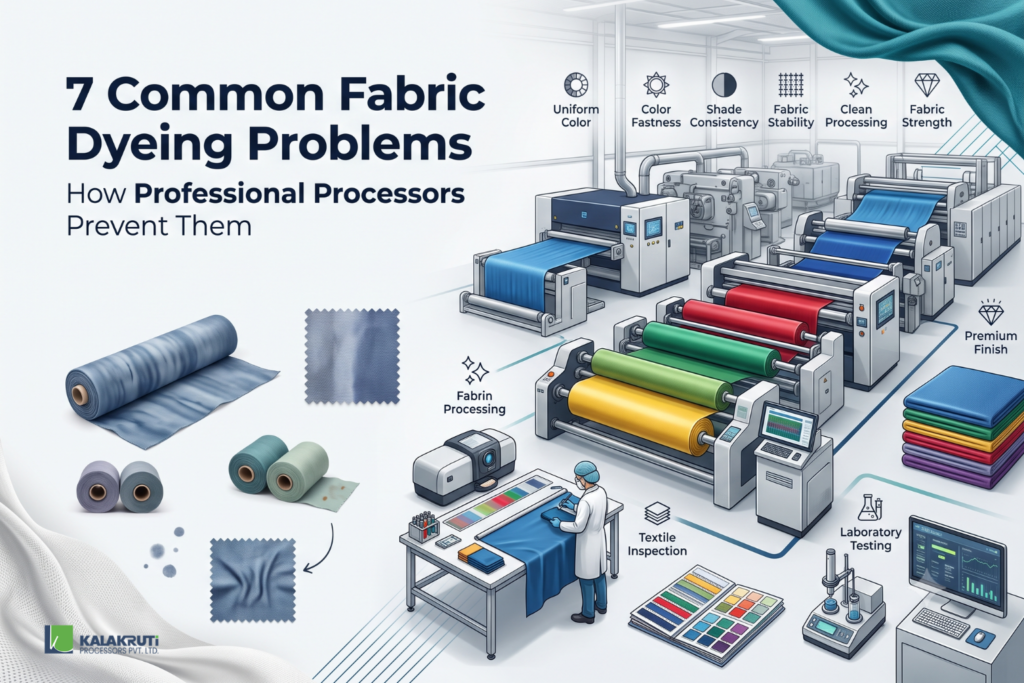
7 Common Fabric Dyeing Problems and How Professional Processors Prevent Them
Fabric dyeing is one of the most critical stages in textile manufacturing. Even premium-quality fabric can lose its value if the dyeing process is inconsistent. At Kalakruti Processors, we combine advanced technology, strict quality control, and years of expertise to ensure every fabric batch meets industry standards.
Here are seven common fabric dyeing problems and how professional textile processors prevent them.
1. Uneven Dyeing
Uneven color distribution can create patches or streaks on the fabric, affecting its appearance.
How Professionals Prevent It:
- Accurate dye measurements
- Controlled dye bath temperature
- Proper fabric movement during processing
2. Poor Color Fastness
Colors that fade after washing, rubbing, or sunlight exposure reduce the fabric’s quality.
How Professionals Prevent It:
- Premium-quality dyes
- Standardized dyeing processes
- Color fastness testing before dispatch
3. Shade Variation Between Batches
Different production batches may show slight color differences, leading to inconsistency.
How Professionals Prevent It:
- Recipe standardization
- Computerized color matching
- Batch-wise quality inspections
4. Fabric Shrinkage
Improper dyeing and finishing can cause unwanted fabric shrinkage.
How Professionals Prevent It:
- Controlled processing conditions
- Pre-shrink treatments
- Fabric stability testing
5. Stains and Dye Spots
Improper chemical mixing or machine contamination can leave visible spots on the fabric.
How Professionals Prevent It:
- Regular machine maintenance
- Proper chemical filtration
- Strict process monitoring
6. Fabric Damage
Incorrect temperatures or harsh chemicals can weaken the fabric structure.
How Professionals Prevent It:
- Fabric-specific dyeing methods
- Optimized chemical usage
- Continuous quality monitoring
7. Inconsistent Fabric Finish
Even after successful dyeing, poor finishing can affect the final look and feel.
How Professionals Prevent It:
- Professional finishing techniques
- Final quality inspection
- Consistent process control
Why Choose Kalakruti Processors?
With over a decade of experience, Kalakruti Processors delivers reliable textile dyeing solutions that focus on:
- Consistent color quality
- Excellent color fastness
- Modern processing technology
- Strict quality control
- Timely delivery
Whether you’re a garment manufacturer, fashion brand, or textile exporter, partnering with a professional processor ensures your fabrics meet the highest quality standards.
FAQs
1. What causes uneven fabric dyeing?
Uneven dyeing is usually caused by incorrect dye concentration, poor fabric movement, or improper temperature control during processing.
2. What is color fastness in textiles?
Color fastness refers to a fabric’s ability to retain its original color after washing, rubbing, perspiration, or sunlight exposure.
3. How do professional textile processors maintain consistent shades?
Professional processors use computerized color matching, standardized dye recipes, and strict batch testing to achieve consistent shades.
4. Why is quality control important in fabric dyeing?
Quality control helps identify defects before delivery, ensuring consistent color, durability, and customer satisfaction.
5. Why choose Kalakruti Processors for fabric dyeing?
Kalakruti Processors offers advanced dyeing technology, experienced professionals, rigorous quality checks, and dependable processing for consistent textile results.