
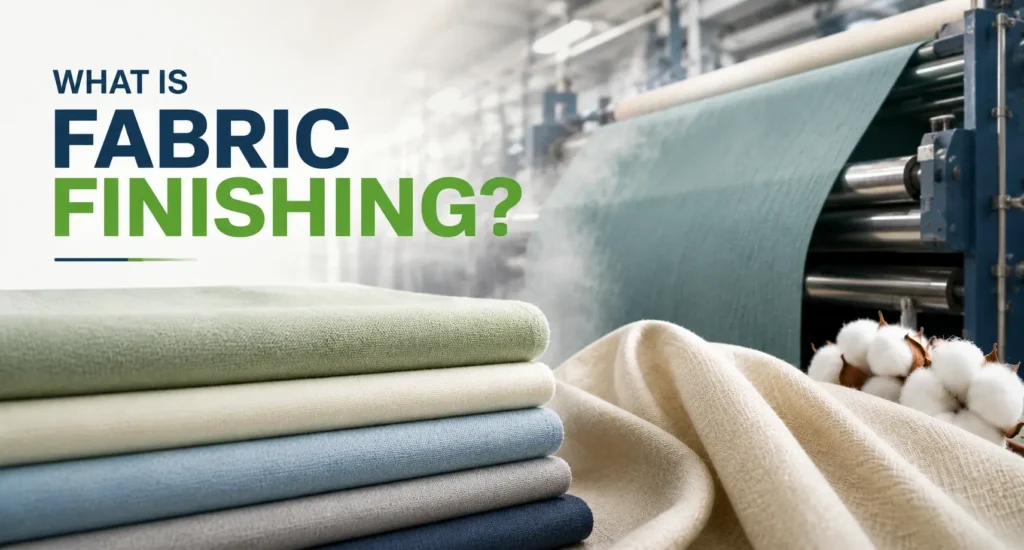
What Is Fabric Finishing? Types, Benefits and Its Role in Textile Quality
Fabric finishing is one of the final and most important stages in textile processing. After dyeing or printing, fabric may not yet have the desired softness, appearance, strength, or performance. Fabric finishing helps improve these properties and gives the fabric its final look and feel.
For textile manufacturers and buyers, proper finishing can make a noticeable difference in fabric quality, durability, appearance, and end-use performance.
What Is Fabric Finishing?
Fabric finishing refers to the treatments applied to fabric after processes such as weaving, dyeing, or printing. These treatments are used to improve the fabric’s appearance, texture, comfort, dimensional stability, and functional properties.
Depending on the fabric type and its intended application, different finishing techniques may be used to achieve the required results.
Common Types of Fabric Finishing
1. Mechanical Finishing
Mechanical processes are used to change the surface and handle of the fabric. Techniques such as calendaring, brushing, raising, and compacting can improve smoothness, softness, and appearance.
2. Chemical Finishing
Chemical finishes are applied to provide specific properties to the fabric. These may include softening, wrinkle resistance, water repellency, antimicrobial properties, and improved durability.
3. Softening Finish
Softening treatments give fabric a smoother and softer hand feel. This is especially important for garments, home textiles, and fabrics designed for direct skin contact.
4. Anti-Shrink and Dimensional Finishing
These finishes help control fabric shrinkage and improve dimensional stability. Proper finishing ensures that the fabric maintains its size and shape during washing and use.
5. Functional Finishing
Modern textile finishing can also provide performance-based properties such as water resistance, flame resistance, easy-care characteristics, and other application-specific features.
Why Is Fabric Finishing Important?
Fabric finishing plays a major role in overall textile quality. A well-finished fabric can offer:
- Better softness and comfort
- Improved appearance and surface smoothness
- Better dimensional stability
- Increased durability
- Improved resistance to wrinkles or shrinkage
- Enhanced performance for specific applications
- More consistent quality for garment manufacturing
The right finishing process depends on factors such as fabric composition, construction, dyeing method, end use, and required specifications.
Role of Fabric Finishing in Textile Processing
Finishing is not simply about making fabric look better. It is about achieving the right combination of appearance, feel, performance, and stability.
At Kalakruti Processors, careful textile processing helps ensure that fabrics meet the desired quality requirements from processing to the final stage. Consistent finishing is an important part of delivering fabrics that are ready for garment and textile manufacturing applications.
Frequently Asked Questions
What is fabric finishing in textile processing?
Fabric finishing is the final treatment applied to fabric to improve its appearance, feel, durability, stability, or functional performance.
What are the main types of fabric finishing?
The main types include mechanical finishing, chemical finishing, softening, anti-shrink finishing, and functional finishing.
Why is finishing important after dyeing?
Finishing helps improve the fabric’s hand feel, appearance, dimensional stability, and performance after dyeing.
Does fabric finishing affect fabric quality?
Yes. The correct finishing process can significantly improve fabric comfort, appearance, durability, and overall performance.
Is fabric finishing suitable for all fabrics?
Different fabrics require different finishing methods. The process should be selected according to the fabric composition, construction, and intended end use.
Conclusion
Fabric finishing is a crucial part of textile processing that transforms processed fabric into a more refined, stable, comfortable, and application-ready material. Choosing the right finishing technique can improve both the quality and value of the final fabric.
For textile manufacturers, consistent processing and finishing are essential for achieving reliable results and meeting customer expectations.