
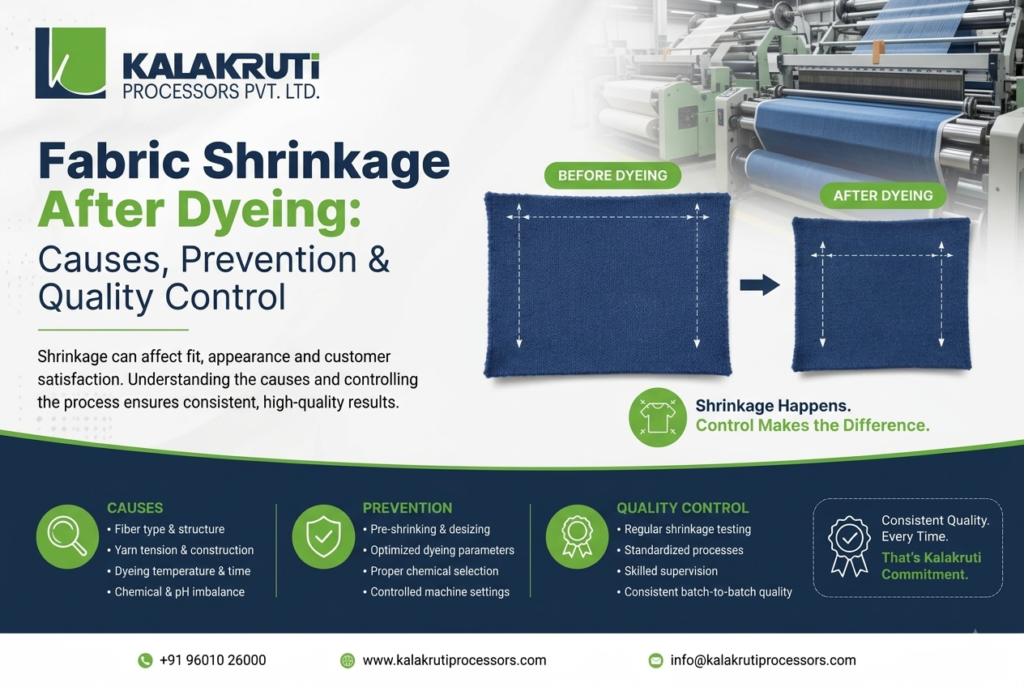
Fabric Shrinkage After Dyeing: Causes, Prevention & Quality Control
Fabric shrinkage after dyeing is a common quality concern in the textile industry. When fabric dimensions change during dyeing, washing, or finishing, it can affect garment fitting, cutting accuracy, appearance, and overall product quality. Understanding the causes of fabric shrinkage after dyeing and implementing proper quality control measures can help textile manufacturers maintain consistency.
What Causes Fabric Shrinkage After Dyeing?
Fabric shrinkage mainly occurs because textile fibres and yarns undergo relaxation when exposed to water, heat, chemicals, and mechanical action.
Key factors include:
- Fibre composition: Cotton and other natural fibres can experience noticeable shrinkage due to their structure.
- Dyeing temperature: Excessive or uncontrolled heat can increase dimensional changes.
- Fabric construction: Tightly or loosely constructed fabrics may respond differently during processing.
- Mechanical tension: Stretching during weaving, dyeing, or finishing can relax later and cause shrinkage.
- Washing and finishing: Improper washing, drying, or finishing conditions can further affect fabric dimensions.
How to Prevent Fabric Shrinkage?
Effective process control is essential for minimizing shrinkage. Textile processors should maintain consistent dyeing temperatures, chemical concentrations, processing times, and fabric tension.
Pre-shrinking or controlled finishing processes can also help stabilize fabric dimensions before the material reaches garment manufacturers. Regular testing at different stages allows processors to identify dimensional changes early.
Quality Control for Fabric Shrinkage
A reliable fabric shrinkage testing and quality control process should include dimensional measurements before and after washing or finishing. Shrinkage should be checked in both the length and width directions.
Maintaining process records, monitoring machine parameters, and conducting batch-wise inspections can help ensure consistent results. Proper quality control not only reduces fabric rejection but also improves customer satisfaction and production efficiency.
Why Fabric Shrinkage Control Matters
For textile manufacturers and garment producers, controlled shrinkage means better cutting accuracy, consistent sizing, improved fabric performance, and fewer production issues. A well-managed dyeing and finishing process is therefore an important part of delivering high-quality processed fabrics.
FAQs
1. Why does fabric shrink after dyeing?
Fabric can shrink because fibres and yarns relax when exposed to moisture, heat, chemicals, and mechanical processing.
2. Which fabrics shrink the most after dyeing?
Natural fibres such as cotton can show significant shrinkage, although the actual amount depends on fabric construction and processing conditions.
3. How can fabric shrinkage be reduced?
Controlled temperature, fabric tension, processing time, washing, drying, and appropriate finishing methods can help reduce shrinkage.
4. How is fabric shrinkage measured?
Fabric dimensions are measured before and after a specified washing or finishing process, and the percentage change is calculated.
5. Why is shrinkage testing important?
It helps maintain dimensional stability, reduce production problems, and ensure consistent fabric quality.