
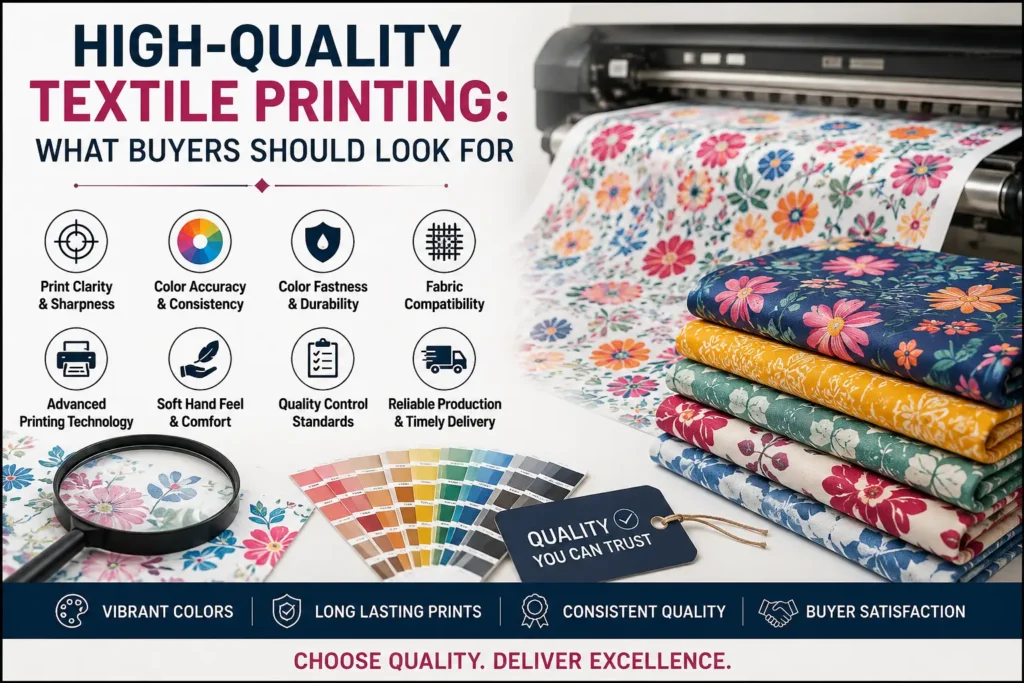
High-Quality Textile Printing: What Buyers Should Look For
In today’s competitive textile market, quality is one of the most important factors influencing purchasing decisions. Whether sourcing fabrics for fashion apparel, home furnishings, uniforms, or retail brands, buyers expect textile prints that are visually appealing, durable, and consistent across every production batch.
However, not all textile printing processes deliver the same results. Understanding what defines high-quality textile printing can help buyers make informed decisions and ensure they receive fabrics that meet their performance and aesthetic requirements.
In this guide, we explore the key factors buyers should consider when evaluating textile printing quality and selecting the right manufacturing partner.
Why Textile Printing Quality Matters
Textile printing is more than simply applying designs to fabric. The quality of printing directly impacts:
- Product appearance
- Brand reputation
- Customer satisfaction
- Fabric performance
- Product lifespan
Poor-quality printing can lead to fading, color inconsistencies, blurred designs, and customer complaints. Investing in high-quality printed fabrics helps businesses maintain product value and build long-term customer trust.
Key Factors Buyers Should Look For in Textile Printing
1. Print Clarity and Sharpness
One of the first indicators of quality textile printing is the clarity of the design.
High-quality prints should feature:
- Sharp outlines
- Clean details
- Smooth color transitions
- Accurate pattern reproduction
Whether the design contains intricate florals, geometric patterns, or digital artwork, every element should appear crisp and well-defined.
2. Color Accuracy and Consistency
Consistent color reproduction is essential, especially for brands with established color standards.
Buyers should verify:
- Color matching capabilities
- Shade consistency across batches
- Uniform color distribution
- Minimal variation during repeat orders
Reliable textile printers use advanced color management systems to maintain consistency from sampling to bulk production.
3. Color Fastness
Color fastness refers to the fabric’s ability to retain its color after washing, rubbing, sunlight exposure, and regular use.
High-quality printed fabrics should offer:
- Excellent wash fastness
- Strong rubbing fastness
- UV resistance
- Minimal color bleeding
Testing reports and quality certifications can help buyers evaluate color durability before placing large orders.
4. Fabric Compatibility
Different fabrics require different printing techniques.
Professional textile manufacturers select printing methods based on fabric composition, including:
- Cotton
- Rayon
- Linen
- Polyester
- Blended fabrics
Choosing the right printing process ensures better color absorption, print quality, and fabric performance.
5. Advanced Printing Technology
Modern textile printing facilities utilize advanced technologies to improve quality and efficiency.
Some common printing methods include:
Reactive Printing
Ideal for cotton and natural fibers, offering vibrant colors and excellent wash fastness.
Pigment Printing
Suitable for a wide range of fabrics and known for cost-effectiveness and versatility.
Digital Textile Printing
Provides exceptional detail, unlimited color possibilities, and quick design customization.
Rotary Screen Printing
Best suited for large-scale production with consistent results.
Buyers should evaluate whether the supplier uses modern equipment and industry-standard processes.
6. Fabric Hand Feel
Printing should not negatively affect the softness or comfort of the fabric.
Premium textile printing maintains:
- Fabric flexibility
- Soft texture
- Breathability
- Wearability
The finished fabric should feel comfortable while preserving the integrity of the original material.
7. Production Capacity and Consistency
For bulk buyers, production reliability is just as important as print quality.
A dependable textile printing partner should offer:
- Consistent production quality
- Large-scale manufacturing capabilities
- Timely delivery
- Quality control systems
Consistency across every production run is critical for apparel brands and retailers.
8. Quality Control Standards
Reputable textile manufacturers implement rigorous quality checks throughout production.
Key quality control measures include:
- Color matching inspections
- Print alignment verification
- Fabric defect checks
- Wash testing
- Final product evaluation
Comprehensive quality assurance minimizes defects and ensures customer satisfaction.
Benefits of Choosing High-Quality Textile Printing
Investing in superior textile printing offers several advantages:
- Enhanced product appeal
- Longer-lasting fabrics
- Improved customer experience
- Reduced product returns
- Stronger brand reputation
- Better market competitiveness
For businesses operating in fashion, home textiles, and retail sectors, print quality can significantly influence sales and customer loyalty.
How to Choose the Right Textile Printing Supplier
When evaluating a textile printing partner, buyers should consider:
- Industry experience
- Printing capabilities
- Fabric expertise
- Quality certifications
- Sample quality
- Production capacity
- Delivery reliability
- Customer support
A trusted supplier acts as a long-term manufacturing partner rather than just a vendor.
High-quality textile printing plays a vital role in the success of textile and apparel products. Buyers should focus on print clarity, color consistency, durability, fabric compatibility, and manufacturing expertise when selecting printed fabrics.
Conclusion
By partnering with an experienced textile printing company that prioritizes quality control and advanced printing technologies, businesses can ensure exceptional products that meet customer expectations and strengthen brand value.
As global textile markets continue to evolve, investing in quality printing remains one of the most effective ways to stand out from the competition.
Frequently Asked Questions (FAQs)
1. What is high-quality textile printing?
High-quality textile printing produces sharp designs, vibrant colors, excellent durability, and consistent results across production batches.
2. Why is color fastness important in textile printing?
Color fastness ensures printed fabrics maintain their appearance after washing, rubbing, and exposure to sunlight.
3. Which textile printing method is best for cotton fabrics?
Reactive printing is often preferred for cotton fabrics due to its vibrant colors and superior wash durability.
4. How can buyers check textile print quality?
Buyers should evaluate print clarity, color consistency, fabric feel, wash fastness, and sample performance before ordering.
5. What causes poor textile print quality?
Common causes include low-quality inks, inadequate quality control, outdated equipment, and incorrect printing techniques.
6. Is digital textile printing suitable for bulk production?
Digital printing is ideal for short to medium runs and customized designs, while rotary printing is often preferred for large-scale production.
7. Why is fabric compatibility important in textile printing?
Different fabrics react differently to printing methods. Proper compatibility ensures better color absorption and print durability.
8. What should buyers look for in a textile printing supplier?
Buyers should consider quality standards, production capacity, technology, delivery reliability, and industry experience.