Reactive Dyeing vs Pigment Dyeing: Which Is Better for Cotton Fabrics?
Cotton remains one of the most widely used textiles in the global fashion and apparel industry. However, the quality, appearance, and durability of cotton fabrics largely depend on the dyeing process used. Among the most common methods, Reactive Dyeing and Pigment Dyeing stand out as popular choices for manufacturers and brands.
If you’re sourcing cotton fabrics for garments, home textiles, or fashion products, understanding the difference between reactive and pigment dyeing can help you make the right decision. In this blog, we compare both dyeing techniques to determine which is better for cotton fabrics based on quality, color fastness, cost, and end-use applications.
What Is Reactive Dyeing?
Reactive dyeing is a process where reactive dyes form a chemical bond with the cotton fibers. This bond allows the dye to become a part of the fabric itself, resulting in vibrant, long-lasting colors.
Reactive dyes are specifically designed for natural fibers such as cotton, linen, and rayon. The process involves multiple stages, including dyeing, washing, and fixing, ensuring superior color penetration and durability.
Key Features of Reactive Dyeing
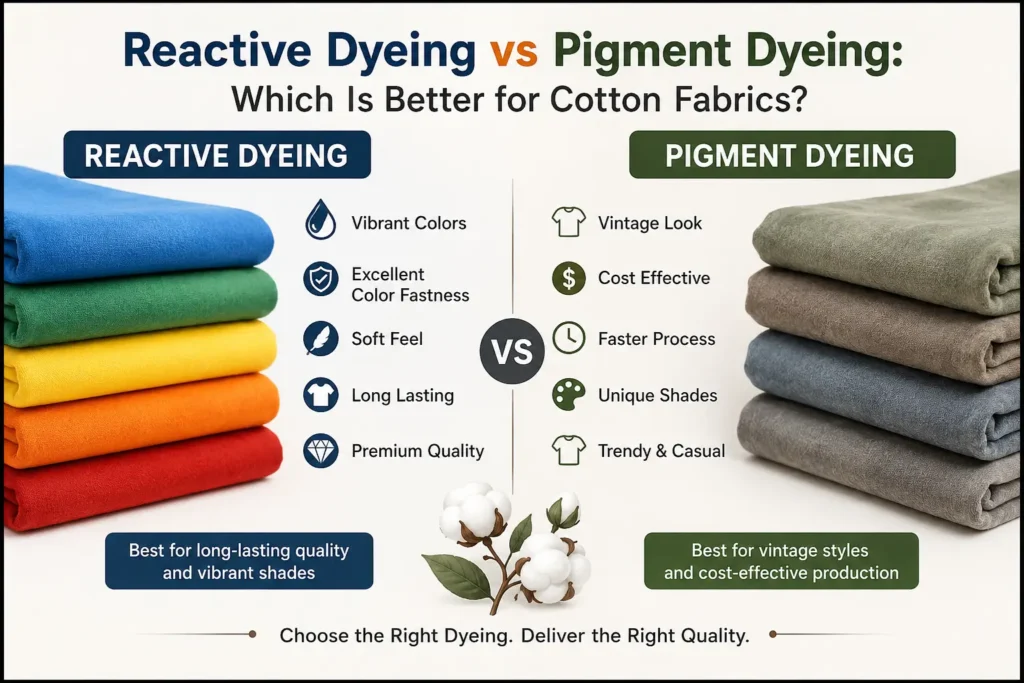
- Excellent color fastness
- Bright and vibrant shades
- Soft fabric feel
- High wash durability
- Suitable for premium-quality garments
What Is Pigment Dyeing?
Pigment dyeing uses insoluble color particles known as pigments. Unlike reactive dyes, pigments do not chemically bond with the fabric fibers. Instead, they are attached to the fabric surface using binders and fixing agents.
Pigment dyeing is widely used for creating vintage, washed, and worn-out effects that are popular in fashion apparel.
Key Features of Pigment Dyeing
- Unique vintage appearance
- Cost-effective process
- Faster production time
- Suitable for fashion and casual wear
- Creates a washed and faded look
Reactive Dyeing vs Pigment Dyeing: A Detailed Comparison
1. Color Vibrancy
Reactive Dyeing: Produces rich, bright, and uniform colors because the dye penetrates deeply into the cotton fibers.
Pigment Dyeing: Creates a more muted, vintage, or faded appearance since pigments remain on the fabric surface.
Winner: Reactive Dyeing
2. Color Fastness
Reactive Dyeing: Offers superior resistance to washing, rubbing, and fading.
Pigment Dyeing: Colors gradually fade over time, especially after repeated washing.
Winner: Reactive Dyeing
3. Fabric Hand Feel
Reactive Dyeing: Maintains the natural softness and comfort of cotton fabric.
Pigment Dyeing: Can slightly alter the fabric texture due to the binder coating applied during the process.
Winner: Reactive Dyeing
4. Cost Efficiency
Reactive Dyeing: Requires more water, energy, chemicals, and processing steps, making it relatively expensive.
Pigment Dyeing: Faster and more economical, making it suitable for large-scale production.
Winner: Pigment Dyeing
5. Fashion Appeal
Reactive Dyeing: Ideal for clean, vibrant, and premium-looking fabrics.
Pigment Dyeing: Perfect for vintage, distressed, and casual fashion trends.
Winner: Depends on design requirements
6. Environmental Impact
Reactive dyeing generally consumes more water and requires extensive washing processes. Pigment dyeing often uses less water but depends on chemical binders.
Today, modern textile manufacturers are adopting eco-friendly technologies in both methods to reduce environmental impact.
Which Dyeing Method Is Better for Cotton Fabrics?
The answer depends on your specific requirements.
Choose Reactive Dyeing if you need:
- Premium-quality cotton fabrics
- Long-lasting colors
- Excellent wash fastness
- Soft hand feel
- High-end apparel and home textiles
Choose Pigment Dyeing if you need:
- Vintage or washed effects
- Cost-effective production
- Fast turnaround times
- Trendy fashion garments
- Casual wear collections
For brands focused on quality, durability, and customer satisfaction, reactive dyeing is generally considered the preferred choice for cotton fabrics.
Why Textile Buyers Prefer Reactive Dyed Cotton Fabrics
Many international apparel brands and textile buyers prefer reactive dyed cotton fabrics because they deliver:
- Superior color retention
- Better customer experience
- Reduced complaints related to color fading
- Enhanced product value
- Premium appearance and feel
As consumer expectations continue to rise, reactive dyeing remains a trusted solution for high-quality cotton textile production.
Conclusion
Both reactive dyeing and pigment dyeing offer unique advantages for cotton fabrics. While reactive dyeing excels in color brightness, softness, and durability, pigment dyeing provides a fashionable vintage look at a lower production cost.
For businesses seeking premium cotton fabrics with exceptional performance and long-lasting color quality, reactive dyeing remains the industry benchmark. However, pigment dyeing continues to be a valuable choice for brands targeting casual and fashion-forward collections.
Understanding the strengths of each method helps manufacturers, designers, and buyers choose the right fabric treatment for their products and market needs.
Frequently Asked Questions (FAQs)
1. What is the main difference between reactive dyeing and pigment dyeing?
Reactive dyeing forms a chemical bond with cotton fibers, while pigment dyeing uses pigments that adhere to the fabric surface with binders.
2. Which dyeing method lasts longer on cotton fabrics?
Reactive dyeing generally offers better color fastness and durability compared to pigment dyeing.
3. Is reactive dyeing more expensive than pigment dyeing?
Yes, reactive dyeing typically involves higher processing costs due to additional washing and fixing steps.
4. Why is pigment dyeing popular in fashion garments?
Pigment dyeing creates unique vintage, faded, and washed effects that are highly popular in casual and streetwear fashion.
5. Which dyeing method provides softer cotton fabrics?
Reactive dyeing usually preserves the natural softness of cotton better than pigment dyeing.
6. Can pigment-dyed fabrics fade over time?
Yes, pigment-dyed fabrics often develop a faded appearance with repeated washing, which is sometimes part of their desired aesthetic.
7. Which dyeing process is best for premium cotton apparel?
Reactive dyeing is generally preferred for premium cotton apparel due to its vibrant colors, softness, and long-lasting performance.
8. How do I choose between reactive and pigment dyeing?
Consider your product goals. Choose reactive dyeing for quality and durability, and pigment dyeing for vintage styling and cost efficiency.